
East Africa: The Republic of DjiboutiOne Year on the Advisory Board of Al-Shifa Hospital


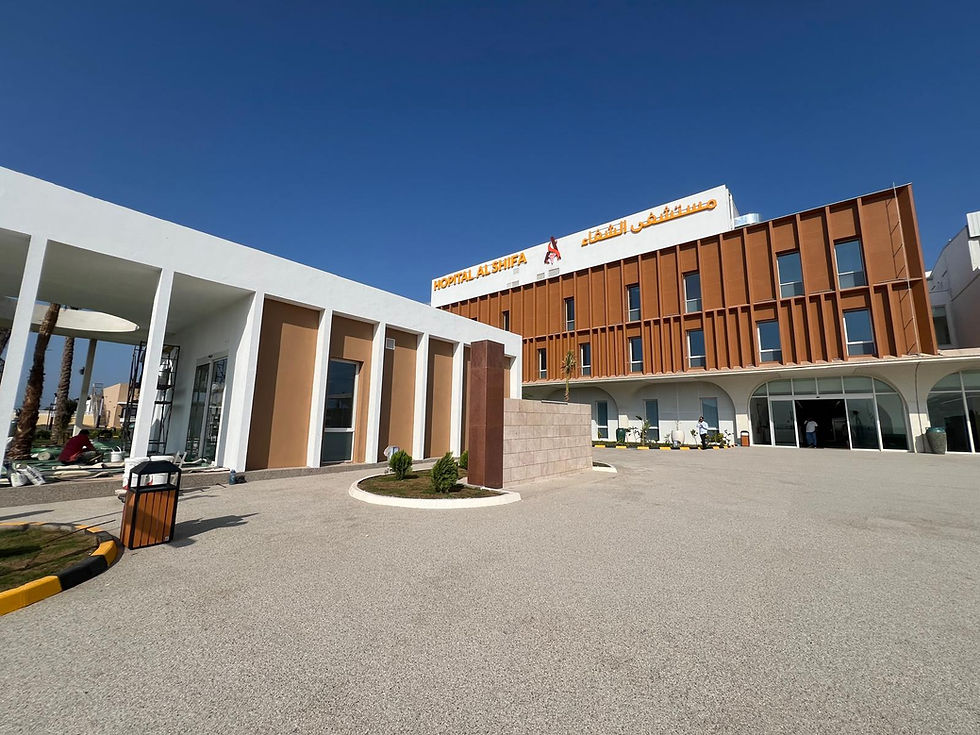
In September 2026, I visited Al-Shifa Hospital in the Republic of Djibouti, East Africa, where I exchanged views on hospital management in my role as an Advisory Board member.
It has now been approximately one year since I became involved with Al-Shifa Hospital.
The hospital is a newly established facility developed as one of the important healthcare projects in the Republic of Djibouti. Equipped with advanced medical technologies, including MRI, 256-slice CT, and mammography, it is expected to play an important role in supporting the future of healthcare not only in Djibouti, but also across East Africa.
Advanced Medical Equipment Alone Does Not Build a Hospital
At the same time, one of the major challenges facing Djibouti is securing and developing healthcare professionals.
In countries that are building new healthcare systems, it is not easy to secure sufficient numbers of experienced physicians, nurses, healthcare professionals, and hospital management personnel within a short period of time.
Al-Shifa Hospital is currently inviting experienced C-level executives from Europe and other regions to establish the foundations of its hospital operations.
However, the goal is not for international professionals to continue operating the hospital indefinitely.
Ultimately, the goal is for the people of Djibouti to operate the hospital themselves.
To achieve this, it is important to transfer the knowledge, experience, and hospital management expertise of international professionals to local people and develop the next generation.
I believe that this “Knowledge Transfer”—the transfer of knowledge and experience—is an extremely important theme for the success of this project.
“If You Build a Good Hospital, Patients Will Come” Is Not Necessarily True
Another issue currently facing Al-Shifa Hospital is how to encourage patients to choose and visit a newly established hospital.
This is not, in fact, an issue unique to Djibouti.
Whether in Japan, the United States, or Africa, when a new hospital or clinic is established, it faces the challenge of “how to make the local community aware of the hospital and encourage people to choose it.”
Introducing excellent medical equipment and constructing an outstanding facility are not enough.
“Who is this hospital for, and what kind of healthcare will it provide?”
It is necessary to clearly define its Vision and Strategy and, based on them, implement specific tactics for patient acquisition, public relations, community partnerships, and other initiatives.
“The Challenges May Be Common, but the Solutions Differ by Country and Hospital”
I have been involved in hospital management in Japan and in various countries and regions.
What I have learned through these experiences is that hospitals face many challenges in common.
Patient safety, quality of care, workforce recruitment, workforce development, organizational development, revenue improvement, cost management, patient acquisition, and leadership.
However, just because the challenges are the same does not mean that the solutions should also be the same.
The appropriate strategy will differ depending on the country’s systems, culture, economic conditions, workforce, the needs of the local community, and the hospital’s history and organizational culture.
What is important is not to bring in a “correct answer” from outside, but to accurately understand the current situation and challenges, think together with the people working on the ground, and develop and implement strategies and tactics that are appropriate for that particular hospital.
In the Age of AI, “Thinking and Executing Together with People on the Ground” Matters Even More
Advances in AI are rapidly transforming tasks such as data analysis, information gathering, and document preparation that previously required significant amounts of time.
At the same time, hospital management cannot be driven by numbers and data alone.
It requires understanding the culture of the country, walking through the hospital, talking with the people who work there, and understanding what patients and the local community need.
It also requires discussing these issues with hospital executives and frontline staff and translating them into strategies that can actually be implemented.
While making use of AI, Afya Management and Innovation will continue to value a form of support that AI alone cannot provide: “going into the field, thinking together with people, and supporting the execution of strategy.”
I hope that Al-Shifa Hospital will continue to grow over the next five, seven, and more years, and eventually become one of the hospitals supporting healthcare not only in Djibouti, but across East Africa.
I also hope to contribute, even in a small way, to healthcare in this region by applying the experience and knowledge I have developed in Japan in hospital management, patient safety, and healthcare quality improvement.
--------
Afya Management and Innovation provides support both in Japan and internationally in areas including hospital establishment, hospital management, patient safety and healthcare quality improvement, organizational development, workforce development, management improvement, and strategy and tactical planning.
If you are interested in international hospital management, new hospital projects, or healthcare workforce development, please feel free to contact us.
Comments